Arrive with Access in Mind
Every successful boat trip begins and ends at the transition between land and water. In Norway, that threshold varies from automated municipal guest marinas (gjestehavner) to centuries-old stone timber quays, steep gravel boat ramps (båtslipp), and glacially smoothed granite ledges bolted with iron mooring rings (fortøyningsbolter).
Knowing how each facility operates before you arrive keeps you from blocking working traffic, grounding a propeller on a submerged ramp lip, or tying up to a seasonal dock that lacks winter ice protection.
01 — Inland Lake Harbours, Timber Piers & Canal Locks
On large inland waterways such as Mjøsa, Randsfjorden, Krøderen, and the Telemark Canal system (linking Skien to Dalen across Norsjø, Flåvatn, Kviteseidvatnet, and Bandak), harbour infrastructure is tailored to seasonal water levels and winter ice cover. Unlike coastal harbours that stay ice-free year-round thanks to the Gulf Stream, inland lakes freeze deeply in winter. As a result, many local boat associations (båtforeninger) haul out floating finger piers every October and re-launch them only after the spring snowmelt stabilises in late May.
If you are trailing a boat to Hamar, Gjøvik, Eidsvoll, or Akkerhaugen in May, check whether the water has reached normal summer regulation height. In early May, Mjøsa can still sit several metres below its mid-summer peak, leaving upper concrete slipways dry or creating a sharp drop-off at the toe of the ramp. On the Telemark Canal, historic stone locks such as Vrangfoss and Eidsfoss require boats to carry generous cylindrical fenders on both sides and two 15-metre handling lines to manage turbulence as the lock chambers fill.
Historic Steamer & Ferry Quay Rules
Many mountain and valley lakes rely on scheduled vessels—such as DS Skibladner on Mjøsa, MS Gjende on Gjende, MB Bitihorn on Bygdin, and MS Henrik Ibsen on Bandak. Their timber piers are active public transport terminals. Never leave a kayak, dinghy, or motorboat unattended in a marked steamer berth, even for ten minutes.
02 — Fjord Guest Marinas & Tidal Pontoons
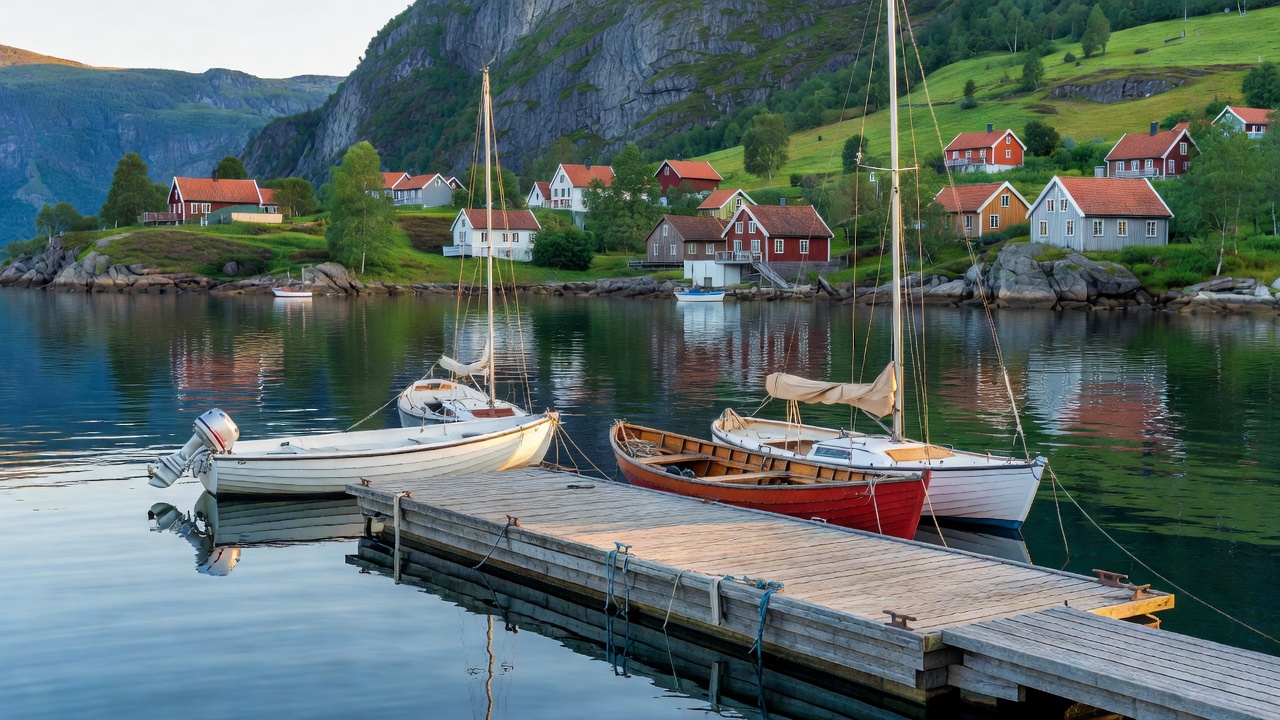
In western and northern fjords—including stops like Balestrand, Aurland, Ulvik, Rosendal, Geiranger, and Reine—guest harbours use heavy floating concrete breakwaters chained to the seabed. Because the pontoon rises and falls with the tide, you can tie alongside or between finger floats without adjusting line length for tidal height. However, two fjord-specific factors require attention.
First is surge and wash from passing traffic. Even inside a harbour basin, displacement waves from car ferries or coastal express boats (hurtigbåt) can cause boats to roll sharply against the dock. Always rig a forward and aft spring line in addition to bow and stern lines, and place fenders at the widest point of the hull rather than hanging them evenly from the rail. Second is automated harbour payment: almost all Norwegian guest harbours use self-service digital payment apps (such as GoMarina) or dockside terminals that provide a PIN code for shore power, hot showers, and waste disposal.
03 — Natural Landings, Rock Bolts & Friluftsloven Rules
Stepping ashore in an unspoilt cove or tying up to a quiet rock wall is one of the great privileges of Norwegian boating. Under Section 7 of the Outdoor Recreation Act (Friluftsloven), you are permitted to draw a boat ashore on uncultivated land (utmark) for a short period without the landowner’s explicit consent, and you may use existing mooring rings or bolts in rock walls unless a sign specifically reserves them for private commercial use.
You may not use a private boathouse (naust), private floating dock, or cultivated garden shore (innmark) without permission, unless an emergency forces you to seek immediate shelter. When landing kayaks or aluminium boats on glacial river deltas in fjords or mountain lakes, beware of two hazards: suspended glacial silt can hide sudden drop-offs or quicksand-like soft mud, and a rising tide on a very flat delta can float a poorly secured kayak away across hundreds of metres of shallow flats.
Pre-Arrival Harbour & Shore Checklist
- Reduce speed below 5 knots at least 150 metres before entering a harbour basin, swimming zone, or narrow anchorage.
- Rig four fenders and two spring lines when mooring on fjord pontoons exposed to express boat or ferry wake.
- Park vehicles and boat trailers exclusively in marked long-term bays; never block timber extraction roads or emergency slipway turnarounds.
- When tying bow-in to a rock bolt (svaberg), verify water depth beneath the stern at dead low tide so the rudder or propeller remains clear of submerged ledges.